

48 hours only! Get 20% off progressive lenses | Use code: GET20


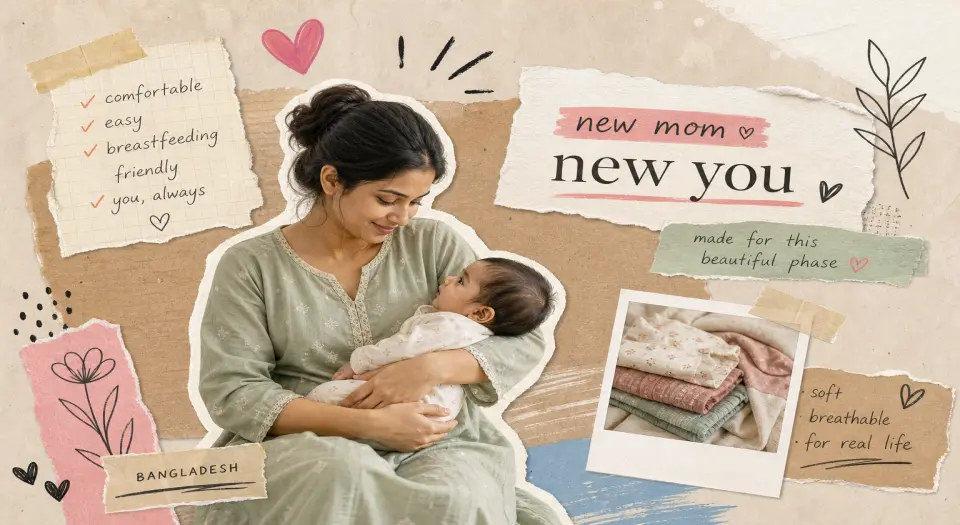
Postpartum clothes in Bangladesh: a new mom's style guide
June 29, 2026
You're home from the hospital. The baby is in your arms (or finally asleep, bless). And then it hits you: what do you actually wear now? Your pre-pregnancy clothes are somewhere between "not a chance" and "not yet." The hospital gown is gone. And nobody, not your doctor, not your mother-in-law, not a single well-meaning relative who showed up with biryani, told you what comes next for your wardrobe.
This moment is more common than you think. Many new moms in Bangladesh face it, whether they delivered at a Dhaka clinic or a hospital in Sylhet. Finding the right postpartum clothes in Bangladesh doesn't have to be complicated, you don't need a lot, just the right pieces in the right fabrics, chosen with your actual life in mind.
What you wear after delivery affects how comfortably your body heals, how easily you can feed your baby, and quietly but genuinely, how you feel about yourself on the hard days. This guide covers fabrics, styles, recovery garments, and where to shop for postpartum clothes in Bangladesh. By the end, you'll know exactly what to buy and where to find it.
Why what you wear after delivery actually matters
Postpartum dressing isn't vanity. It's self-care in one of the most physically demanding seasons of a woman's life. The clothes you wear in those first six to eight weeks either support your recovery or quietly work against it.
On the physical side, the wrong fabrics and fits create real problems. Tight waistbands press directly on C-section incisions. Rough synthetic materials irritate skin that's already more sensitive than usual. Non-breathable fabric in Bangladesh's heat and humidity makes exhaustion feel worse. Soft, loose, breathable clothing isn't just comfortable, it's genuinely useful for recovery.
The mental dimension is just as real, and not enough people talk about it. Getting dressed in something that actually fits and feels good sends a small but meaningful signal to your brain: you're caring for yourself, not just surviving. Bangladeshi new moms often carry a lot in this period, hosting family visitors, managing expectations, breastfeeding around the clock, navigating new routines. Choosing clothing that feels good and covers well is a quiet, practical form of self-respect. It counts.
Best fabrics for postpartum clothes in Bangladesh's climate
Bangladesh's heat and humidity don't take a break because you've just had a baby. If anything, postpartum hormonal shifts make you sweat more than usual, especially in the first few weeks. Fabric choice here is not a minor detail.
Cotton and cotton blends are the clear winner. Cotton breathes, absorbs moisture, and sits gently on skin that's more sensitive during recovery. Pure cotton and cotton-jersey blends are the most practical choice across Bangladesh's warmer months, which is most of the year. They're also machine-washable and hold up to frequent washing, which matters when nursing leaks are a regular occurrence.
Jersey knit deserves a special mention as the fabric of choice for nursing tops and comfortable lounge sets. It drapes softly against the body, moves without restriction, and doesn't create any pressure on tender postpartum areas. A fabric blend with a small percentage of elastane gives that extra ease of movement as your body gradually shifts shape over the weeks after delivery.
Avoid heavily synthetic fabrics like polyester in the early postpartum weeks. They trap heat against the skin, cause irritation, and feel genuinely uncomfortable in humid weather. If you have a C-section scar, scratchy or stiff synthetic material near that area is something you'll want to skip entirely. Keep it soft, breathable, and easy to wash.
Styles that work for nursing access, modesty, and real comfort
The practical challenge of shopping for postpartum clothes in Bangladesh involves three things at once: your body is healing and changing, you need nursing access throughout the day and night, and you're often receiving family visitors who expect a reasonably put-together version of you. Good news: these goals don't have to conflict.
Kurtis and cotton tunics
Kurtis and cotton tunics are the everyday postpartum staple for Bangladeshi new moms. They're culturally familiar, modest by design, and come in loose cuts that accommodate a postpartum belly without looking intentionally oversized. A cotton kurti with a discreet front opening or an overlapping layer at the chest gives easy nursing access while still being suitable for family visits and everyday wear. This category is the most versatile investment you'll make in your postnatal wardrobe.
Kaftans and lounge sets
Kaftans are widely loved among new moms for good reason, they're loose, require no waistband, and slip on in seconds at 3am when you're functioning on two hours of sleep. Paired with a soft nursing bra, they make overnight feeding manageable without the fumbling. Pajama sets and two-piece lounge sets serve a similar purpose for moms who want something a bit more coordinated at home. These also double as nursing pajamas in Bangladesh's warmer nights, making them practical around the clock.
Nursing-specific tops
Nursing tops with hidden panel openings or wrap-front designs let you feed your baby without undressing in front of visitors or wrestling with layers. To anyone watching, they look like ordinary tops. This category is worth investing in for the early months, when breastfeeding is most frequent and often the least predictable. The convenience is real, and so is the dignity it gives you in social situations.
Recovery garments: what to buy and what to skip
The postpartum recovery garment market is noisy with products claiming to transform your body back to its pre-pregnancy state in record time. Most of that noise isn't worth your money or attention. A few things, though, are genuinely useful.
High-waisted postpartum briefs are worth buying. Think functional, soft, high-waisted underwear rather than shapewear, the goal is gentle compression without creating pressure on a C-section incision. They hold postpartum pads securely in place and offer mild support to the midsection during early movement. Plan on five to seven pairs for the first few weeks; you'll want to change them frequently.
Abdominal binders, sometimes called belly wraps, are commonly recommended in Bangladesh after both vaginal delivery and C-section. Studies on postpartum recovery support their usefulness for pain relief and mobility improvement, particularly after cesarean birth, for more on how an abdominal binder can aid C-section recovery. They support the lower back and abdomen when you're getting up, moving around, and managing a newborn. They're worth buying if your doctor recommends one. If your doctor hasn't mentioned it, ask before purchasing. Breathable cotton or cotton-blend versions are significantly more comfortable than stiff synthetic ones, especially in Bangladesh's climate.
What you can skip in the first six weeks: heavily structured shapewear, tight control leggings, and any compression piece that requires effort to put on. Your body needs space to heal right now. Those products can wait until your doctor clears you for more active movement, usually around the six-week mark.
Where to shop for postpartum clothes in Bangladesh
Your options for finding nursing-friendly and postnatal wear in Bangladesh have grown considerably in recent years, though the market varies a lot in terms of product quality, sizing consistency, and how well the selections actually serve a postpartum body.
MaaMio is a Bangladesh-based online store built around the full mother-and-child journey, from pregnancy through early childhood, which means the product selection is shaped around what new moms here actually need. The store carries maternity and nursing-focused categories, including feeding wear, nursing-friendly tops, and postpartum support garments chosen with Bangladesh's climate and cultural preferences in mind. Browse their current product pages and size guides to find postpartum items and verify pricing, as their range continues to grow. No international sizing confusion, no generic stock that treats postpartum as an afterthought.
Daraz postpartum listings function as a broad marketplace with postpartum and maternity listings from multiple sellers. It's useful for comparing prices across products, but quality and sizing consistency vary depending on the individual seller. Check reviews and seller ratings carefully before purchasing. Stores like MOM + mini and TAMS offer maternity-focused clothing at the styled end of the market, typically ৳1,500, 3,500 and above for their key pieces. For budget basics, single cotton items from smaller sellers start around ৳600, 900. One thing to keep in mind: explicit "postpartum" labels are less common in Bangladesh than you'd expect. Many nursing-friendly and recovery-appropriate items are categorized under maternity wear; the fit and function is often similar, just marketed to a pregnancy audience.
The expanding local conversation around postpartum clothing, including coverage of comfort and style in the Bangladeshi context, reflects how retailers and designers are starting to respond to real needs for new mothers (comfort and style in postpartum fashion in Bangladesh).
How to order online and actually get what you expect
Ordering postpartum clothing online removes a lot of hassle, but it comes with its own set of considerations when it comes to sizing, timing, and returns.
Size up or choose adjustable styles during the first four to six weeks. Your postpartum body is not your pre-pregnancy body, and it's not your third-trimester body either. Swelling, fluid retention, and breast changes from milk coming in all affect fit in ways that make your usual size unreliable. For nursing tops and kurti styles, going one size up gives you the room you need without looking shapeless. For kaftans and lounge sets, free-size or large fits most comfortably for the majority of new moms.
Timing matters more than most first-time moms realize. Inside Dhaka, most online orders arrive within one to three working days. Outside Dhaka, plan for three to seven days. If you're in your third trimester, order your postpartum basics before your due date. Waiting until after delivery means shopping while sleep-deprived, likely on a phone, while holding a newborn. A little planning now saves a lot of stress later.
On returns: most Bangladeshi sellers accept returns for damaged or incorrect items within 24 hours of delivery, but they don't typically offer open exchange windows for fit issues. Read the seller's policy before purchasing, check size charts carefully, and when in doubt, message customer service to confirm measurements. Cash on delivery remains widely available across Bangladesh and is a smart choice for first-time purchases from stores you haven't ordered from before.
Your postpartum wardrobe doesn't need to be large, just right
A handful of the right pieces in the right fabrics will carry you through the first several months with far less frustration than a full closet of things that don't quite work. A few cotton kurtis with nursing access, a couple of kaftans or lounge sets for home, soft high-waisted briefs, and a nursing bra or two, that's a solid, practical foundation. You can always build from there as your body and routine settle.
Choosing comfortable, practical clothing after delivery is one of the simplest ways you can care for yourself during one of the most demanding seasons of your life. You deserve to feel human in what you're wearing, even on the days when everything else feels like too much.
Ready to start building your postnatal wardrobe? MaaMio carries nursing-friendly styles and postpartum support pieces chosen with Bangladeshi moms specifically in mind, browse their collection to find postpartum clothes in Bangladesh that fit your body, your climate, and your life right now.