

48 hours only! Get 20% off progressive lenses | Use code: GET20


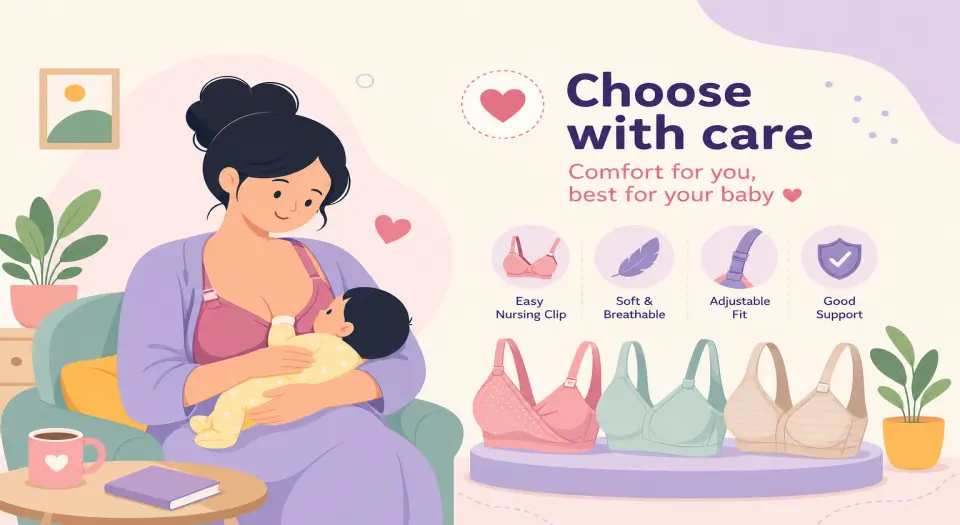
Nursing bra in Bangladesh: how to choose the right one
June 21, 2026
You're in the final weeks of pregnancy or freshly postpartum, your regular bras stopped fitting months ago, and now you're scrolling through nursing bra listings in Bangladesh with no real way to tell which one will actually work. Some are padded, some are wireless, some claim to be "one-size" and clearly are not. The confusion is real, and it's almost entirely avoidable with the right information up front.
This guide covers exactly what new mothers need to know before buying a nursing bra in Bangladesh: when to start, how to measure yourself postpartum, which fabrics survive this climate, and which design will actually work at 3 a.m. during a night feed. Stores like MaaMio now carry nursing bras built for postpartum bodies with sizes and styles relevant to the local market, which makes finding a functional option much easier than it used to be.
When to start wearing a nursing bra
Most first-time mothers don't know whether to buy before delivery or wait until after. The short answer: don't wait. Breasts begin changing noticeably from around week 28 to 32, and by the third trimester most regular bras have become genuinely uncomfortable. Buying a breastfeeding bra before your due date means you have one ready when your milk comes in, which typically happens within 2 to 4 days after delivery.
A maternity bra and a nursing bra are slightly different products, but many designs serve both stages. If you're buying in the third trimester, look for a nursing-specific design so the same bra carries you through delivery and into the months of feeding that follow. Buying one functional bra at week 33 beats scrambling for one while sleep-deprived and engorged in week one postpartum.
The signals that your current bra has stopped working are practical, not stylistic: underwire digging into breast tissue, the band riding up your back, cups that no longer contain your breast tissue fully, or soreness along the wire line after an hour of wear. These aren't comfort preferences; they're your body telling you the structure is wrong for this stage.
One buying caution worth noting: breast size fluctuates significantly in the first two to four weeks after delivery as your milk supply establishes itself. Start with two or three nursing bras rather than stocking up on five of the same size. Reassess the fit at the four to six week mark, and buy more once your size has stabilized.
How to get your postpartum size right
Sizing is the single biggest reason nursing bras fail for new mothers, a fact supported by research into postpartum breast changes (research on postpartum breast changes). Most women go up at least one cup size during pregnancy and nursing, which means your pre-pregnancy measurement from two years ago is not a useful reference point. Measure now, from your current body, before placing any order.
How to measure yourself at home
Measure your underbust: wrap a tape measure snugly around your ribcage, just under your bust, and record the number in inches. If the result is an odd number, round up to the next even number. That's your band size (32, 34, 36, 38, and so on).
Measure your overbust: wrap the tape around the fullest part of your bust. Keep the tape level across your back.
Subtract your band size from your overbust measurement. A difference of 1 inch is an A cup, 2 inches is B, 3 inches is C, 4 inches is D, and 5 inches is DD/E.
If your measurements fall between sizes, size up. Postpartum breast tissue is denser and more sensitive than usual, and a slightly roomier cup is far more comfortable than compression against swollen tissue. When in doubt, go up one size, not down.
Also check that the band fits on the loosest hook when you first buy it. This gives you room to tighten the band over the coming months as your ribcage gradually returns toward its pre-pregnancy size. A bra that only fits on the tightest hook from day one leaves you nowhere to adjust.
Choosing a nursing bra in Bangladesh: which fabric actually works in the heat
Cotton is the practical default for daily nursing wear in Bangladesh. It breathes well, absorbs moisture, tolerates repeated machine washing, and doesn't irritate the sensitive skin that many postpartum mothers deal with. For daily wear against your skin in Dhaka's heat and humidity, cotton or combed cotton is the minimum standard to look for. Organic cotton is worth considering if skin sensitivity is an active concern.
Bamboo and modal blends outperform cotton on cooling and moisture-wicking, which makes them especially useful for night feeds or the hottest months of the year. They also tend to feel noticeably softer. The trade-off is price: these fabrics typically sit at a slightly higher price point, but they perform better in sustained heat and are worth the difference if you run warm or sweat easily while nursing.
Skip bras built primarily from polyester or nylon. Synthetic-heavy fabrics trap heat and moisture against skin that's already dealing with leaking milk and Bangladesh's humidity. Regardless of how they're marketed, a purely synthetic construction is a practical mismatch for this climate and this life stage.
Clip-style, pull-aside, or wireless: which design suits your routine
The design of your nursing bra determines how feeding actually goes, not just how the bra looks on a product page. There are three main formats, each suited to a different situation.
A clip-style drop-cup bra uses a nursing clasp that you unhook with one hand, dropping the cup forward to expose the breast without removing the bra entirely. This design offers the most structured support between feeds and allows precise, one-handed access during a feed. It works well for daytime wear when you're moving around and want the bra to actually hold things in place. The trade-off is that the clasp adds a small amount of hardware, which some mothers find fiddly at first.
A pull-aside nursing bra has a stretchy cup that you simply fold to the side. There's no clasp, no hardware, and the design is generally softer and more comfortable for sleep or resting at home. The trade-off is less structured support, which some mothers find perfectly adequate in the early months and others find insufficient as their supply increases and their breasts get heavier.
Wireless designs deserve a specific mention because of what they avoid. Underwired bras carry a genuine risk of pressing on milk ducts if the fit is even slightly off, which can contribute to blocked ducts or mastitis. For more on underwire safety while breastfeeding, see this practical guide (underwire bras while breastfeeding). A wireless front-opening nursing bra accommodates the size changes that happen between feeds more comfortably and eliminates that risk entirely. For a bra worn daily through a full breastfeeding period in Bangladesh's heat, wireless is the safer structural choice for most mothers.
What to check before you place the order
Beyond size and style, a few practical details separate a nursing bra that actually works from one that gets returned after a week.
Check that straps are adjustable. Postpartum bodies change over months, not just weeks, and a bra with fixed straps can't adapt with you. Confirm that the band closes on the loosest hook so you have room to tighten it later. These aren't bonus features, they're the mechanical properties that let the bra remain useful across the full nursing period, especially as your body continues to shift in the months after delivery.
Test the access mentally before buying. Can you unhook or fold the cup with one hand while holding a baby with the other? If the design requires two hands, fine motor precision, or a specific angle you won't manage at 3 a.m., it will frustrate you fast. Clip placement and snap ease matter more than they appear to from a product photo alone.
On pricing in Bangladesh: entry-level nursing bras from local sellers on platforms like Daraz start as low as ৳150 to ৳350, though fabric quality at that price point is inconsistent. Mid-range options with better construction, including padded or seamless designs from dedicated mother-and-child stores, typically sit between ৳700 and ৳900. Premium options from some brands sit closer to ৳1,150. Budget based on how many you plan to buy and how frequently you'll wash them; a bra washed daily needs to hold up to that use.
Where to buy nursing bras in Bangladesh
MaaMio is worth checking first if you want a curated selection without the noise of a general marketplace. As a store focused specifically on mothers and children, the nursing bra range is built around expectant and postpartum needs, sizes relevant to the local market, wireless and padded options, and delivery available across Bangladesh. You're comparing a handful of well-matched options rather than filtering through hundreds of unrelated listings.
Other platforms worth checking include Daraz, Shajgoj, and Sassy Secret BD. Daraz has the widest inventory and the broadest price range, but it requires more filtering to find quality options among generic listings. Shajgoj stocks a dedicated maternity bra Bangladesh category with some well-known brands. Sassy Secret BD explicitly offers discreet packaging and nationwide delivery, which some buyers prefer. Whichever platform you use, check the seller's specific size chart before ordering since sizing varies meaningfully between brands.
A few practical tips before you confirm any order: if your measurements fall between sizes, order up. Check whether the seller accepts exchanges, since postpartum fit can be genuinely hard to predict from measurements alone. If you're buying multiple bras, start with one to confirm the fit and fabric before ordering a full set. One confirmed fit is worth more than three guesses.
What actually matters when choosing a nursing bra in Bangladesh
The best breastfeeding bra isn't the most expensive one or the one with the most features listed on the product page. It's the one that fits your body right now, survives daily washing for several months, and lets you feed comfortably without a struggle. Getting there comes down to three things: accurate current measurements, a breathable fabric suited to Bangladesh's climate, and a design that matches how you actually feed, not how you imagine you will. For an independent look at top-performing designs and practical user feedback, consult trusted reviews such as the best nursing bra reviews.
For most mothers, a wireless drop-cup bra in cotton or a bamboo blend covers all three. Start with your measurements, pick your fabric, choose a design that works one-handed at odd hours, and order one to test the fit before committing to a full set. MaaMio's nursing bra collection is built around exactly this life stage, making it a practical place to begin your search for the best nursing bras Bangladesh has on offer right now. If you want to read more about how breasts change long-term after feeding, this summary is a helpful reference (breasts after breastfeeding).